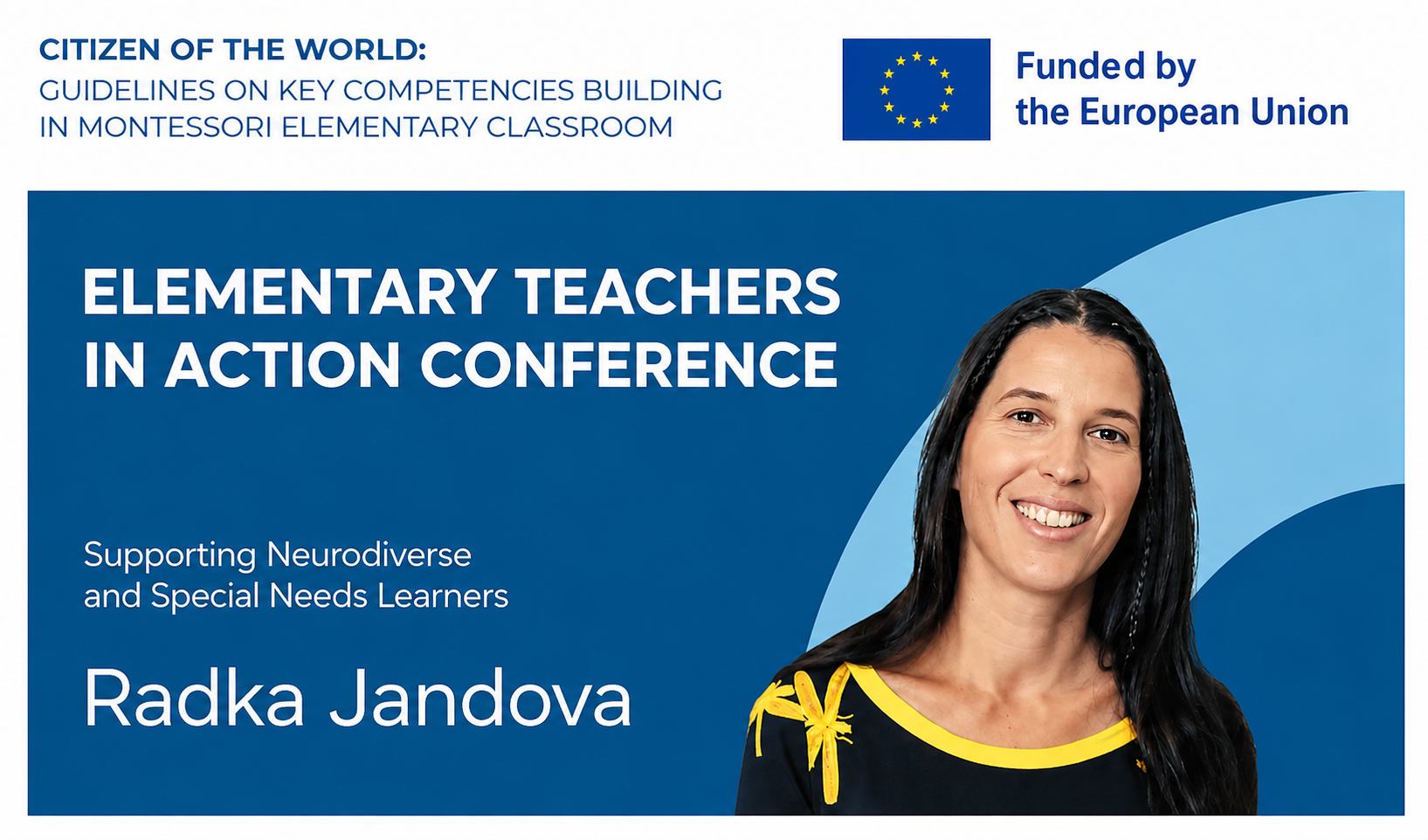
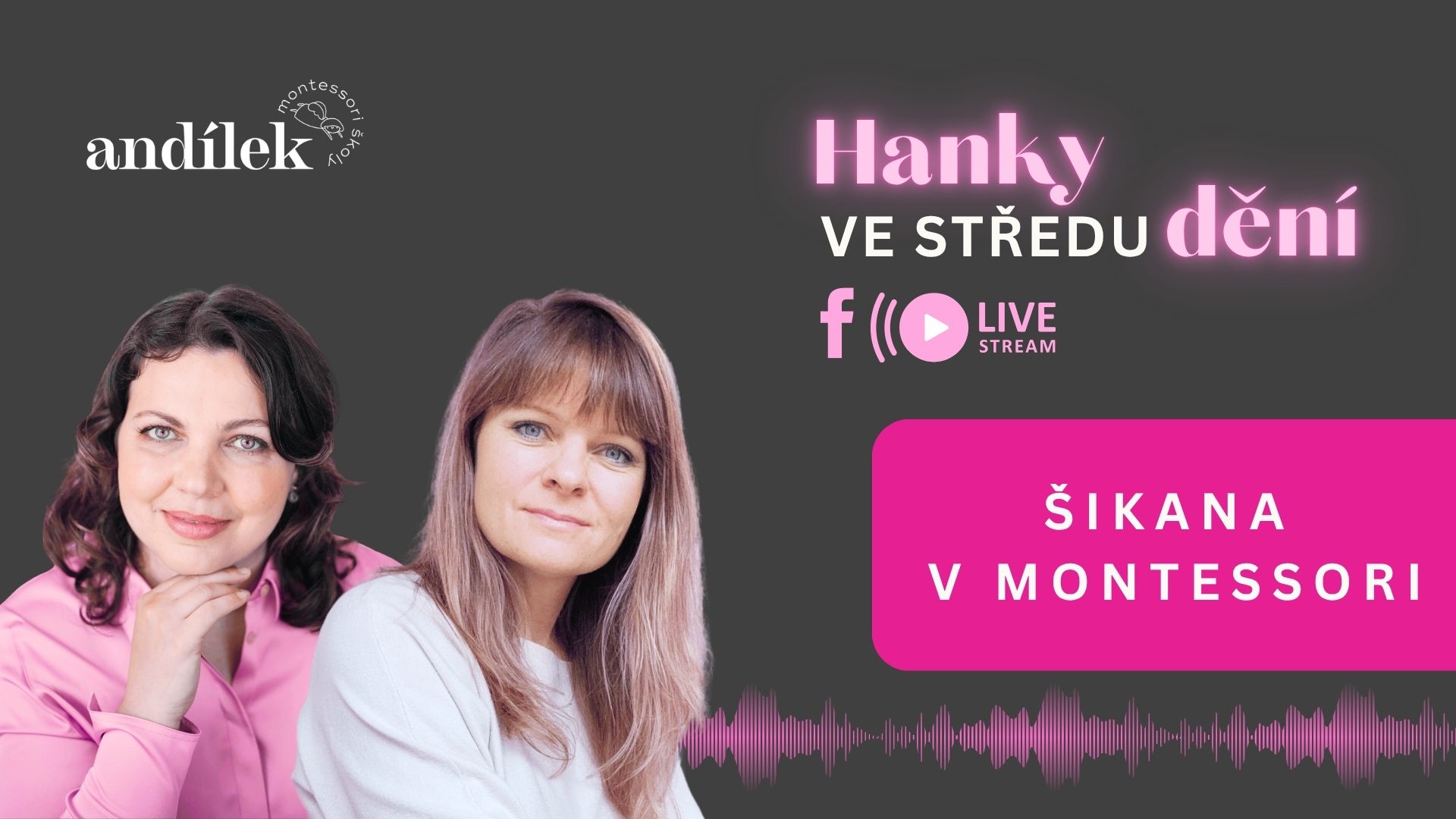
What happens when someone used to verifying facts, searching for connections, and questioning first impressions takes a closer look at education? That was Pavlína Čížková’s path to Montessori. She was originally drawn to the natural sciences and to genuinely understanding how things work. Later, she began thinking about education — and about the adult’s role in Montessori — in much the same way.
When she started teaching at a grammar school, instead of the curiosity she expected, she often ran into exhaustion. Students had packed schedules and a huge amount of information to absorb, but they often lacked context and an answer to the simple question of why they were learning it in the first place. So Pavlína didn’t respond by adding more assignments or piling on pressure. She did the opposite. She simplified, connected topics to one another, and paid closer attention to what was actually happening in the classroom. She gave students more room, and gradually noticed an important shift: they started collaborating differently — not because they had to, but because they wanted to.
Montessori as an Experience, Not an Alternative
Pavlína arrived at Montessori gradually, through her own experience rather than through theory. What she had been intuitively looking for in her own teaching, she suddenly saw play out in the everyday life of a Montessori classroom. Children chose their own work, were able to return to it, concentrate, and function with less outside control.
Her scientific background also shaped how she looked at Montessori — mainly through observation. She wanted to know what actually happens when a child is given a prepared environment, enough time, and room for independence. For her, that concrete, observed experience became more important than the question of whether Montessori should be labeled “alternative” or “traditional” education.
What You Notice When You Watch a Montessori Classroom
At first glance, a Montessori classroom can look unusual. Children of different ages work in the same room — some sitting at a table, others moving around or talking to one another. Instead of one activity for the whole class, children can each work on something different.
But if you watch the environment for a while, other patterns start to emerge. Younger children observe and learn from older ones, while older children naturally take on more responsibility. Some children can stay focused on one activity for a long time; others return to their work again and again. The adult doesn’t need to direct every step, and yet the environment still has its own order.
The Adult’s Role in Montessori Is Changing
The adult’s role in Montessori isn’t built on constantly directing the child. The adult prepares the environment, observes, shows the child the work, and then steps back at the right moment so the child can continue independently. The ability to observe and recognize when a child genuinely needs help is one of the most important parts of the job.
In practice, that often means sitting with the urge to step in immediately — and not acting on it. Letting a child finish a task their own way, even if the result isn’t perfect. Waiting to see whether they can manage on their own, instead of jumping in with help right away. Moments like these show just how much children can really handle when they’re given time, trust, and the chance to find their own solutions.
Trust Doesn’t Mean Leaving a Child Without Support
A lighter touch doesn’t mean the adult stops mattering. Quite the opposite. The adult’s role in Montessori also means creating a safe, understandable environment, noticing what the child needs, and offering support exactly when it’s needed.
Pavlína’s experience shows a gradual shift in how we see children and learning itself. From the belief that an adult must mainly explain, control, and direct, she moved toward a different question: what happens when you create the right conditions and give children more room?
That’s precisely when situations can emerge that constant direction might never have allowed to happen at all. Children take on responsibility, collaborate, look for their own solutions, and gradually discover that learning doesn’t have to be just a response to an adult’s request — it can also come from their own curiosity.
Další články z blogu
How to Know You’ve Chosen the Right Kindergarten for Your Child | We Ask Parents
23. 4. 2026
Choosing a kindergarten is one of the first big decisions we make as parents. It's not just about a place where a child spends part of the day — it's an environment that shapes their first experiences outside the family, and their relationship with learning and with themselves.
Neurodiversity in Montessori: How to Support a Child Without Taking Over
20. 8. 2026
Every child learns a little differently. Some need more time, others need movement, a quieter space, or a clearer plan. For neurodivergent children, these differences are often more pronounced. How can we support them in a Montessori environment without doing for them what they can gradually learn to do on their own?
Bullying Can Happen Anywhere. What Matters Is Whether We Notice It in Time.
6. 5. 2026
When people hear the word bullying, many picture only the most serious situations: a child who no longer wants to go to school, visible harm, fear, tears — something impossible to miss. But bullying usually doesn't start that visibly.
Cookies on this website are used to personalise content and ads, provide social media features and analyse traffic. In addition, we share information about your use of the website with our social media, advertising and web analytics partners, who may combine it with other information you have provided to them or that they have collected from your use of their services.
Individual consents
Necessary, to make the site work
Essential cookies help make the website usable by enabling basic functions such as site navigation and access to secure areas of the website. Without these cookies, the website cannot function properly.
Preferences, so you can save your settings
Preference cookies allow a website to remember information that changes the way a website behaves or looks, such as your preferred language or the region you are in.
Analytics, so that we can improve the site
Analytical cookies help website owners understand how visitors interact with the website by collecting and reporting information anonymously.
Marketing, so you don't see advertising you're not interested in
Marketing cookies are used to track visitors across websites. The intention is to serve ads that are relevant and engaging to the individual user, and thus more valuable to publishers and third-party advertisers.