11 principles
How Montessori works
01
Based on scientific observation
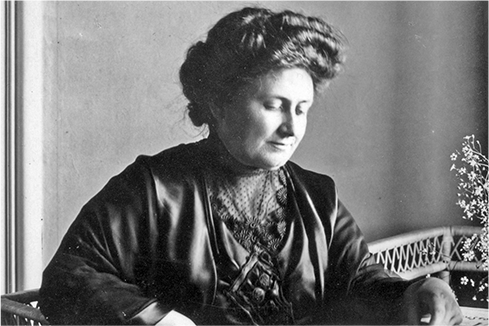
Montessori education is based on the scientific observation of human development. Dr Maria Montessori, a scientist and physician, built her approach on thousands of hours of observing children and a life full of experimentation and refinement. She developed a scientific model of human development and a matching educational approach that allows human potential to be fully realised.
02
Developmental stages
Montessori observed distinct stages in children's development. The model highlights the period from birth to six years as an intense time of formative development with lasting cognitive, social and emotional effects. The school years are the peak period of learning, and adolescence is a time of social development and intellectual maturing. At every age, Montessori education responds to the characteristics of that age.
03
Choice
Montessori recognised the importance of independent choice in learning. It becomes the basis of deep engagement and growing independence.
04
Freedom and responsibility
A person can learn when not threatened. Freedom is a key feature of the Montessori approach, but it is firmly tied to the responsibility it brings, and always matches the responsibility the child can carry. Children choose activities from a prepared range, decide how long and where to work and with whom, while respecting the activities of others. When they finish, they return the material complete and ready for the next child. Rules created together in the classroom apply to children and adults alike.
05
Deep morality
The whole Montessori approach is based on understanding oneself, the others who share the planet, and the world around us, and on respecting it. Montessori teaches children to love themselves, others and the whole world. This morality requires daily independent reflection on good and evil, finding balance within ourselves, choosing and standing up for good.
06
Mixed-age groups
Following the developmental stages, one class serves children of different ages within a suitable age range. Children can move on naturally when they are ready for more difficult material, build a real community and learn from guides and peers alike.
07
Working with mistakes
Montessori observed that children are driven to learn by an inner, natural need, and how easily this drive can be spoiled. She avoided external motivation, especially rewards and punishments, and developed materials that give the child immediate feedback through a built-in control of error. When a guide's check is needed, the guide respects the child's development and values the work done. This respectful approach is called formative assessment. A mistake is seen as a challenge that opens the way to further options.
08
Trained adults support development
Adults trained in Montessori principles and practice present each child with a coherent, individualised learning plan based on observation. They give children keys to the world rather than final truths. Children work in their zone of proximal development: with help with a process or technique, they succeed, then practise independently, look for other solutions and create. Lessons presented by the guide are the tool for working in this zone. Communication is based on a partnership that respects everyone's roles.
09
Uninterrupted work time
Classes offer long, uninterrupted periods of independent work. Children build attention, work purposefully and deepen their concentration when they set their own pace.
10
Montessori materials
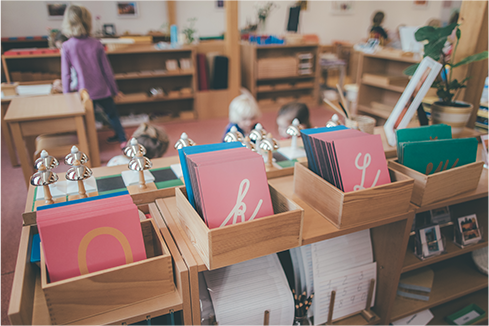
A systematic set of materials that allows children to realise their potential widely and to go deeper according to their interests. The materials are practical, hands-on and concrete and allow self-correction. They support deep engagement, curiosity, independence and self-directed learning.
11
Prepared environment
Montessori called a varied, rich, motivating and trusting environment that meets the needs of children of a given age the prepared environment. It is safe, yet contains reasonable risks, because without risk there is neither learning nor creativity. Children step out of their comfort zone and develop the brain's executive functions. Other children, adults and the atmosphere are part of the prepared environment too.
Montessori materials
A prepared environment